Mon–Fri 8AM–5PM · Telehealth Available
ACCEPTING NEW PATIENTS

Comprehensive Evaluation for Seizures, Spells, and Episodes of Altered Awareness
Seizures can look very different from person to person. Some patients have shaking or convulsions, while others may experience staring spells, confusion, memory gaps, unusual sensations, sudden falls, unexplained loss of awareness, or episodes that are difficult to describe.
At VerityMD Neurology, we provide careful neurological evaluation, routine EEG, and ambulatory video EEG monitoring when clinically appropriate to help clarify whether symptoms may be related to seizures, epilepsy, fainting, migraine, sleep disorders, medication effects, or other neurological conditions.
Symptoms We Evaluate
First-time seizure
Recurrent seizure-like episodes
Staring spells
Loss of consciousness
Memory gaps or blackouts
Nocturnal events or possible seizures during sleep
Breakthrough seizures despite treatment
Driving clearance questions related to seizures
Seizures after stroke, brain injury, tumor, infection, or other neurological illness
Conditions We Help Evaluate or Manage
Epilepsy
First-time seizure evaluation
Breakthrough seizures
Nonepileptic events versus epileptic seizures
Syncope versus seizure
Post-stroke seizure
Nocturnal spells
Medication-resistant seizures
Services and How They Help
Neurology Consultation for Seizures and Spells
A seizure evaluation begins with detailed history from the patient and family, review of triggers, episode timing, medications, prior imaging, prior EEG results, and neurological examination.
How this helps:
Clarifies whether symptoms may represent seizures
Identifies possible triggers or risk factors
Determines whether EEG testing, MRI review, labs, or medication changes may be appropriate
Routine EEG
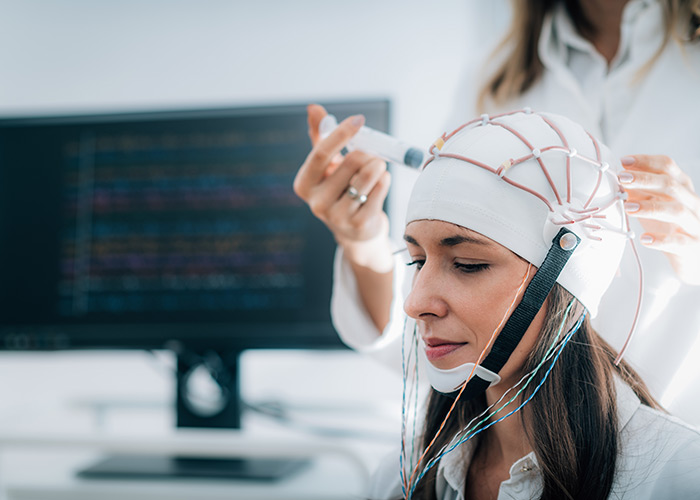
A routine EEG is a noninvasive brain wave test that records electrical activity from the brain using scalp electrodes.
How this helps:
Looks for epileptiform discharges or abnormal brain wave activity
Helps support or clarify a seizure diagnosis
May guide medication and safety decisions
Ambulatory Video EEG Monitoring
Ambulatory video EEG allows brain wave activity and video to be recorded over a longer period while the patient is at home, when clinically appropriate.
How this helps:
Increases the chance of capturing intermittent events
Helps correlate symptoms with EEG and video findings
May help distinguish epileptic seizures from nonepileptic events
Medication Review and Seizure Treatment Planning
Anti-seizure medication decisions depend on seizure type, age, comorbidities, pregnancy considerations, mood, sleep, headaches, interactions, and side effect risk.
How this helps:
Improves medication safety
Reviews adherence and breakthrough seizure causes
Supports better seizure control and patient education
Seizure Safety Counseling
Patients may need counseling about driving restrictions, water safety, heights, medication adherence, sleep, and emergency planning.
How this helps:
Reduces injury risk
Helps families know what to do during an event
Clarifies when emergency care is needed
When Seizures & Ambulatory EEG Monitoring May Be Helpful
A first seizure
Recurrent unexplained spells
Episodes of staring or loss of awareness
Unexplained falls or blackouts
Nocturnal spells
Breakthrough seizures
Clinical concern for seizure despite normal prior testing
What to Bring or Have the Referring Office Send
Referral from PCP, specialist, or referring provider
Medication list, including over-the-counter medications and supplements
Relevant office notes, hospital records, imaging reports, labs, and prior neurological testing if available
Prior EEG reports if available
Brain MRI or CT reports if available
Videos of events if safely available
Important Note
This page is for patient education and does not replace individualized medical advice. Testing and treatment decisions should be based on the patient’s history, examination, records, medications, insurance requirements, and clinical judgment.

Emergency Symptoms
Call 911 or go to the nearest emergency department for:
A seizure lasting more than 5 minutes
Repeated seizures without return to baseline
First-time seizure
Seizure with injury, pregnancy, or trouble breathing
Seizure with persistent confusion, weakness, speech difficulty, or facial droop
New Patient Referrals
VerityMD Neurology accepts new patient referrals by fax from the patient’s primary care physician, specialist, or referring provider’s office. To ensure accurate triage, insurance verification, and appropriate scheduling, referrals should be sent directly from the referring provider’s office.
Patients who would like to be seen at VerityMD Neurology should contact their PCP, specialist, or referring provider and ask them to fax a neurology referral with relevant clinical notes, insurance information, medication list, imaging reports, lab results, and prior neurology records if available.

We accept the following insurance






Client Stories
What Our Patients Say
My husband and I are very impressed with the care and professionalism of Dr. Mittal and his staff. Dr. Mittal took time to listen to us - to ask us questions - and to clearly explain the diagnosis and his treatment recommendations. We feel very fortunate - and relieved - to have this neurologist as a member of our care team.

Dr. Manoj Mittal thoroughly understands the complexities of my condition (involving my brain, neck, and nerves) and developed a comprehensive action plan. During my follow-up visit, he carefully assessed my progress to ensure I was staying on track. I had been neglecting a few aspects of my treatment, but he guided me back on course. My treatment involves a team of specialists, multiple surgeries, and personal effort, and I’m truly satisfied with the plan. For the first time in nearly a decade, I feel genuinely hopeful. Thank you, Dr. Manoj Mittal. A+
I was concerned about issues and I called their office. My appointment was not until January and after hearing my concerns, the staff had me scheduled on a Monday, which happens to be two days from when I called voicing my concerns. Nice job.
Dr. Manoj Mittal is an excellent neurologist. He listens carefully, explains everything clearly, and truly cares about his patients. My mom is under his care, and we are very grateful for his expertise and compassion. Highly recommend!
Saw Dr. Mittal and during the first visit he was able to order a few tests that helped diagnose my issue. During the appointment he spent a good amount of time with me and made me feel heard. He was then able to see me again on short notice to help direct me towards next steps, I am very grateful to him.
My 1st appointment with Dr. Mittal, was such a pleasure & surprise. The staff & Dr. Mittal were kind & not in such a hurry. The Dr. took a half hour with me, thoroughly explaining his thoughts & what was to come. Impressed is not a strong enough adjective! Thank you for being a true Doctor who cares.

Neurology Clinic, offers expert neurological care for the Sacramento Metropolitan Area. Under the guidance of board-certified neurologist Dr. Manoj Mittal


Services
Memory & Brain Health Center
Neuropathy & Nerve Testing Center
Parkinson’s & Tremor Care
Seizure & EEG Monitoring
Stroke & TIA Follow-Up
Dizziness & Balance Disorders
EMG / Nerve Conduction Testing
Autonomic & Small Fiber Neuropathy
Botox Neurology Treatments
Contact
Office Hours
Mon-Fri: 8 AM–12 PM, 1–5 PM
Sat-Sun: Closed
Copyright 2026. VerityMD Inc. All Rights Reserved.
Terms and conditions | Privacy Policy | Powered by Get Top Listed Inc.